What Is Scarborough’s Reading Rope and How Does It Explain Reading Development?
Scarborough’s Reading Rope explained simply—how word recognition and language comprehension weave together to create skilled reading.

What Is Scarborough’s Reading Rope?
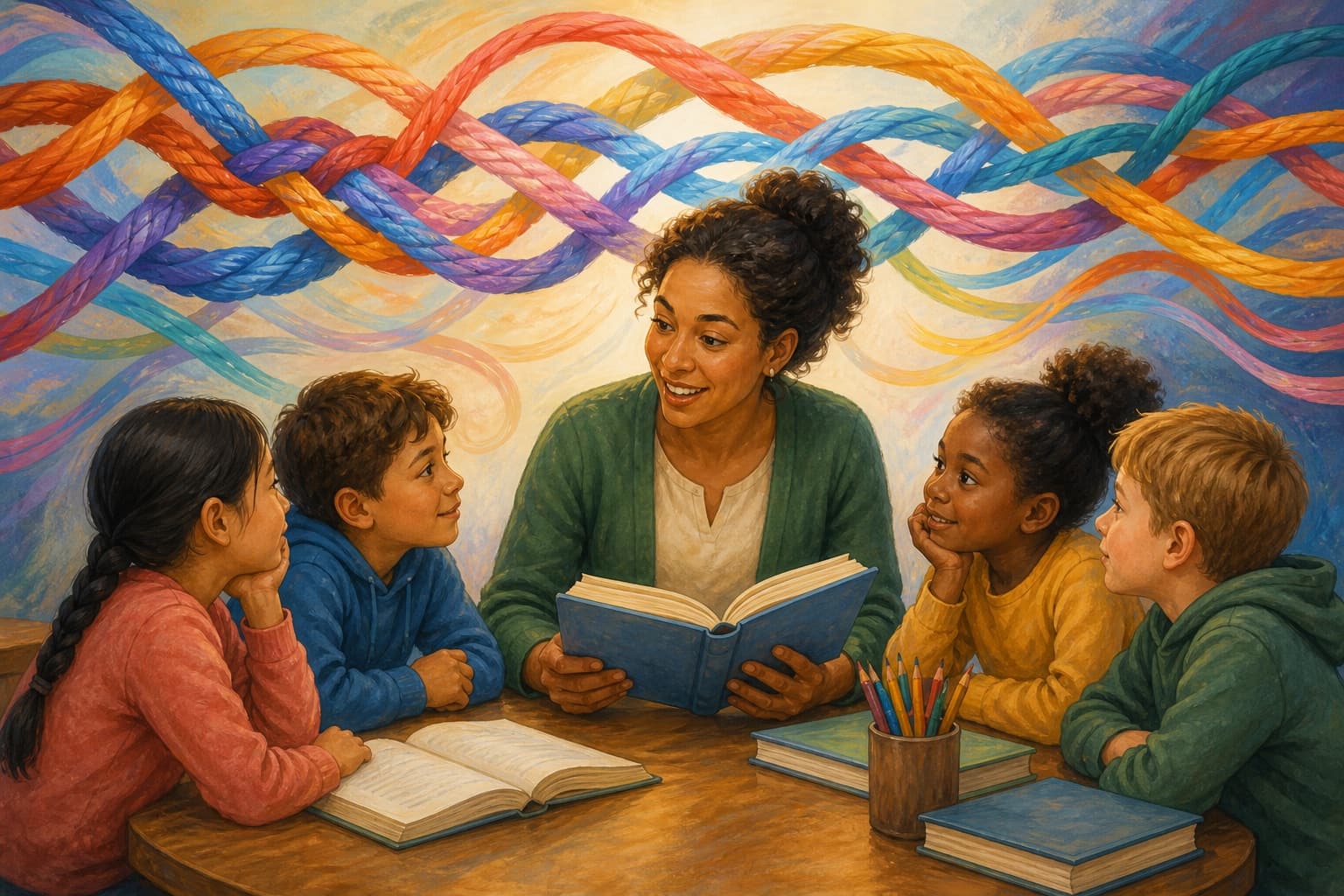
Scarborough’s Reading Rope was created by reading researcher Dr. Hollis Scarborough in 2001. The model compares reading development to a rope made of many smaller strands.
According to the model, skilled reading is created by two major areas:
- Word Recognition
- Language Comprehension
These two areas contain several smaller skills that become increasingly connected as children grow into fluent readers.
The stronger these strands become, the stronger the overall “rope” becomes.
To learn more about how reading skills develop, explore our guide on How Children Learn to Read: The Science Behind Literacy Development.
The Word Recognition Side of the Reading Rope
The word recognition strands help children read words accurately and automatically. These skills allow children to recognize words quickly so they can focus more attention on understanding the meaning of what they read.
The key components include:
Phonological Awareness
Phonological awareness is the ability to recognize and work with sounds in spoken language.
Children develop this skill by learning to:
- Identify rhyming words
- Recognize individual sounds in words
- Blend sounds together
- Break words into smaller sound parts
These early skills prepare children for connecting sounds to letters.
Decoding
Decoding is the ability to use knowledge of letters and sounds to read words.
Phonics instruction helps children learn:
- Letter-sound relationships
- Spelling patterns
- How to blend sounds
- How to read unfamiliar words
Learn more about the importance of phonics in Why Is Phonics Instruction Essential for Developing Strong Readers?.
The Language Comprehension Side of the Reading Rope
Reading is about more than recognizing words. Children must also understand what those words mean and connect ideas together.
The language comprehension strands include:
Background Knowledge
Children understand texts more easily when they have knowledge about the topic they are reading.
For example, a child with knowledge about animals may better understand a story about wildlife because they already know related concepts and vocabulary.
Parents can build background knowledge by:
- Exploring new topics together
- Visiting museums or libraries
- Having conversations
- Reading a variety of books
Vocabulary
A strong vocabulary helps children understand what they read.
Parents can support vocabulary growth by:
- Explaining unfamiliar words
- Using new words in conversations
- Discussing books together
The more words children understand, the easier it becomes to comprehend increasingly complex texts.
Language Structures
Children need to understand how sentences are organized and how ideas connect.
Reading aloud is one of the best ways to expose children to different sentence structures and more advanced language.
Verbal Reasoning
Verbal reasoning helps children think deeply about what they read.
This includes skills such as:
- Making predictions
- Drawing conclusions
- Understanding themes
- Connecting ideas
Literacy Knowledge
Children also need to understand how books and written language work.
This includes knowing:
- How stories are structured
- How informational texts are organized
- How authors communicate ideas
Why Does Scarborough’s Reading Rope Matter?
Scarborough’s Reading Rope helps explain why learning to read requires more than one skill. A child may be strong in one area but need additional support in another.
For example:
- A child may decode words accurately but struggle with comprehension.
- A child may have strong vocabulary but need more phonics practice.
- A child may enjoy stories but need support reading independently.
Understanding these differences helps parents provide more targeted support.
How Parents Can Support All Parts of the Reading Rope
Parents can strengthen reading development by supporting both word recognition and language comprehension.
Helpful strategies include:
- Reading aloud every day
- Practicing phonics skills
- Asking questions about books
- Building vocabulary through conversations
- Encouraging independent reading
- Choosing books that match reading ability
For additional ideas, read How to Build a Consistent Reading Routine for Your Child.
Personalized Reading Practice Supports Growth
Because reading involves many connected skills, children benefit from practice that addresses their individual needs.
Literacy Leap provides personalized reading activities based on each child’s assessment results. Children receive targeted practice with reading skills, including personalized passages and activities designed around their current abilities.
Parents can also access progress reports that provide insight into their child’s strengths and areas for growth.
Help Your Child Build Strong Reading Skills
Scarborough’s Reading Rope shows that reading development is a gradual process. Children become skilled readers when many different abilities come together through consistent practice and instruction.
By supporting phonics, vocabulary, comprehension, and a love of reading, parents can help strengthen every strand of their child’s reading rope.
If you are looking for personalized support to help your child grow as a reader, sign up for a free Literacy Leap account today. Literacy Leap helps children build essential reading skills through personalized practice, decodable passages, and progress tracking.